
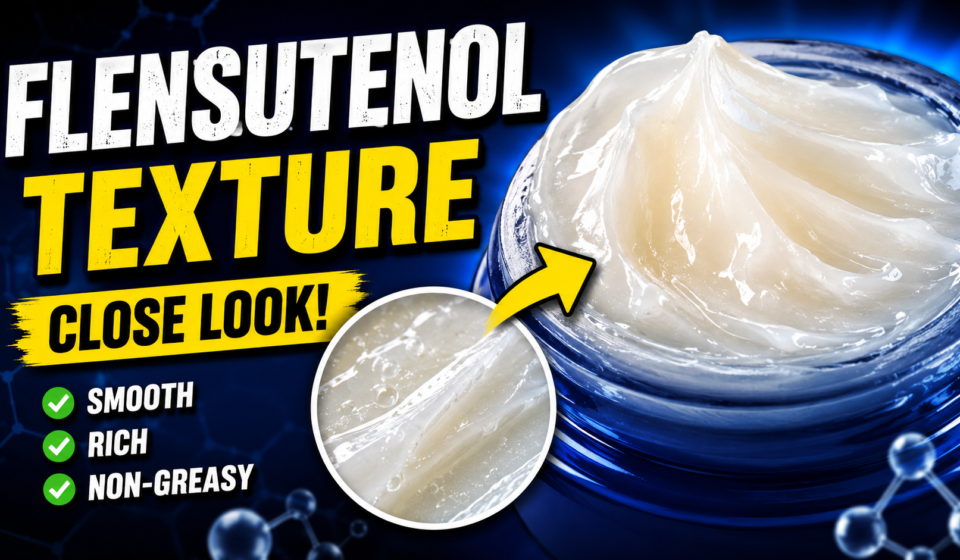

Understanding the texture and properties of chemical compounds is essential for their effective application across industries. Flensutenol, a synthetic compound increasingly recognized in pharmaceutical and material sciences, exhibits unique textural characteristics that influence its usability and efficacy. In this comprehensive article, we will explore the flensutenol texture, its physical and chemical properties, industrial uses, and the effects it imparts in various applications.
What is Flensutenol?
Flensutenol is a synthetic compound primarily utilized in pharmaceutical research and material engineering. While its chemical structure is complex, its physical texture plays a significant role in determining its functionality. The term texture in this context refers to the physical characteristics of flensutenol at a microscopic and macroscopic level, including its granularity, cohesiveness, and surface properties. Understanding these properties helps scientists and engineers predict its behavior in formulations, drug delivery systems, and composite materials.
The study of flensutenol has expanded due to its ability to interact with other compounds in controlled ways, which makes its texture analysis vital. Texture directly affects the solubility, stability, and mechanical properties of formulations containing flensutenol. Researchers have observed that variations in production methods, temperature, and storage conditions can significantly alter its textural characteristics.
Physical Properties of Flensutenol Texture
The physical properties of flensutenol texture are central to its applications in pharmaceutical and industrial processes. Flensutenol typically exhibits a crystalline structure with fine granularity. This crystalline nature contributes to its mechanical stability and predictable dissolution rates. Unlike amorphous compounds, which may vary in consistency and reactivity, flensutenol’s crystalline texture allows for uniformity across batches, ensuring consistent performance in practical applications.
Another critical property is its surface roughness, which impacts its interaction with solvents and other compounds. A smoother surface can enhance solubility and mixing efficiency, while a rougher texture may be preferable for controlled-release applications. Thermal stability is another consideration; the texture of flensutenol remains stable across a range of temperatures, making it suitable for use in formulations requiring high-temperature processing.
Chemical Properties Influencing Texture
Flensutenol’s chemical properties are deeply intertwined with its texture. The compound’s molecular structure dictates how molecules pack together, forming crystalline patterns that define its granular appearance. Hydrogen bonding, van der Waals forces, and molecular polarity all contribute to the formation of specific textural traits.
These chemical interactions influence properties such as solubility, adhesion, and cohesion. For example, flensutenol with tightly packed crystalline structures may dissolve more slowly, allowing for extended-release effects in pharmaceutical formulations. Conversely, a slightly amorphous form of flensutenol can improve solubility, enabling faster absorption in applications where rapid activity is desired.
Methods for Analyzing Flensutenol Texture
Texture analysis of flensutenol is essential for quality control and formulation optimization. Several advanced techniques are employed to characterize its physical and chemical texture:
- Microscopy Analysis – Scanning Electron Microscopy (SEM) and Transmission Electron Microscopy (TEM) are used to observe surface morphology, crystal formation, and particle size.
- Spectroscopy Techniques – Fourier Transform Infrared Spectroscopy (FTIR) can identify molecular bonding patterns that affect texture.
- X-ray Diffraction (XRD) – Provides insights into crystalline structures and detects polymorphic variations.
- Rheology Tests – Assess the flow and deformation properties of flensutenol powders, crucial for processing and mixing operations.
These methods ensure that flensutenol batches maintain consistent texture, which is pivotal for reproducible results in both research and industrial applications.
Industrial and Pharmaceutical Uses of Flensutenol
The unique texture of flensutenol makes it highly versatile across several industries. In pharmaceuticals, its texture affects drug formulation, stability, and bioavailability. Controlled crystalline texture allows for sustained-release tablets, ensuring that active compounds are delivered gradually over time. Its fine granularity also enables efficient blending with excipients and fillers without causing aggregation or clumping.
In materials science, flensutenol’s texture can be manipulated to enhance mechanical properties of composites. For instance, in polymer matrices, its crystalline particles improve rigidity, tensile strength, and thermal resistance. Researchers are exploring its role as a texturizing agent, where precise control over particle size and surface roughness can lead to high-performance coatings, adhesives, and composite materials.
Effects of Flensutenol Texture on Solubility and Reactivity
Texture directly influences the solubility and reactivity of flensutenol. The degree of crystallinity, particle size distribution, and surface area determine how the compound interacts with solvents. Fine, uniform crystals typically dissolve more efficiently, which is crucial for pharmaceutical applications where rapid absorption is desired. Conversely, larger crystals or irregularly shaped particles may slow dissolution, which is beneficial for controlled-release formulations.
Texture also affects chemical reactivity. Compounds with high surface area due to rough or porous textures can react faster due to increased molecular exposure. Understanding and manipulating these effects allows chemists to tailor flensutenol for specific reactions, whether in drug synthesis, polymer modification, or catalysis processes.
Storage and Handling Considerations
Maintaining the integrity of flensutenol’s texture requires careful storage and handling. Exposure to moisture, heat, or mechanical stress can alter its physical structure, potentially affecting solubility, stability, and efficacy. Ideal storage conditions include cool, dry environments with controlled humidity. Additionally, proper handling during transportation and processing prevents particle aggregation, contamination, and loss of desired textural characteristics.
Industrial guidelines recommend using airtight containers, minimal agitation, and controlled temperature settings. Understanding how flensutenol texture responds to environmental factors allows manufacturers to maintain product consistency and reliability.
Advances in Flensutenol Texture Engineering
Recent research has focused on engineering flensutenol texture to optimize its performance in both pharmaceutical and industrial applications. Techniques such as nano-crystallization, microfluidization, and surface coating allow scientists to modify particle size, shape, and surface properties. These modifications can enhance solubility, stability, and even bioavailability, making flensutenol an adaptable compound for cutting-edge formulations.
Emerging applications include targeted drug delivery systems, where engineered textures facilitate precise control over release rates and tissue absorption. In material sciences, texture-engineered flensutenol is being incorporated into advanced composites, lightweight coatings, and bio-compatible materials.
Safety and Regulatory Considerations
Understanding flensutenol texture is not only important for efficacy but also for safety. The compound’s physical form affects inhalation risks, skin contact, and potential for contamination. Regulatory agencies require detailed characterization of texture and particle size to ensure safe handling and proper labeling. Proper documentation of texture parameters in Material Safety Data Sheets (MSDS) and compliance with pharmaceutical and industrial standards is essential for market approval and consumer safety.
Future Perspectives on Flensutenol Texture Research
The study of flensutenol texture is expected to expand with advancements in nanotechnology, drug delivery, and material science. Researchers are investigating how microscopic and nanoscale textural modifications can improve efficiency, reduce side effects, and open new applications in both biomedical and industrial fields. Innovations in texture analysis technology will continue to drive precision in formulation and material design, ensuring that flensutenol remains a valuable and versatile compound in scientific and industrial endeavors.
Conclusion
Flensutenol texture is a critical factor that influences its chemical behavior, solubility, stability, and industrial applications. From pharmaceuticals to material sciences, understanding and manipulating texture allows scientists to optimize performance, ensure safety, and create innovative solutions. As research progresses, the ability to engineer and control flensutenol texture will unlock new potentials, making it an indispensable compound for future applications.