
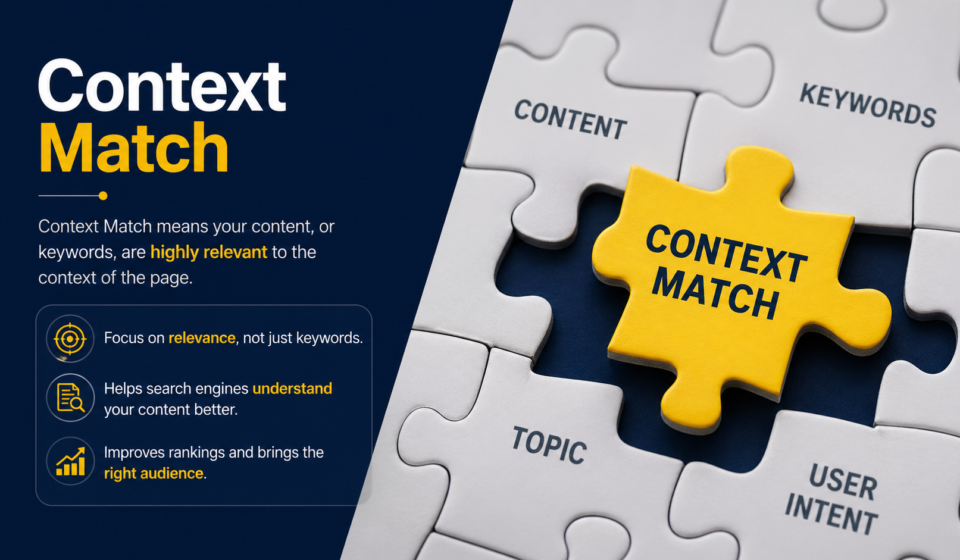

Introduction: What is Context Match?
Context match refers to the alignment between content, the user’s search intent, and the surrounding context in which the information is presented. In the digital world, context match has become an essential factor in optimizing user experience, SEO, and content strategy. By ensuring that content matches the specific needs, preferences, and search intent of users, businesses can increase their online visibility, improve engagement, and ultimately drive higher conversions.
Understanding the importance of context match in SEO, marketing, and content strategy can help you develop better content and optimize your online presence for both search engines and your audience.
The Role of Context Match in SEO
In the realm of SEO, context match refers to how well the content aligns with a search query’s intent. Google and other search engines have evolved to be more sophisticated in interpreting the intent behind user searches. This shift has made context match a key factor in ranking content.
Search engines aim to serve the most relevant results to users, and this relevance is often determined by how well the content on a page matches the context of the search. Content that aligns closely with the user’s search intent tends to rank better, as it provides value and answers specific queries.
For instance, if a user types “how to improve SEO for a website,” the search engine is likely to prioritize content that explains the steps or best practices to optimize a website for search engines, rather than content about SEO tools or case studies.
The Connection Between Context Match and User Experience
Context match is not just about pleasing search engines—it also plays a significant role in improving user experience (UX). When content is tailored to the context in which it is consumed, it becomes more engaging, relevant, and valuable.
A well-matched context ensures that users find exactly what they’re looking for, reducing bounce rates and increasing time on site. This contributes to a better overall experience, which in turn can lead to higher conversions, brand trust, and loyalty. For instance, e-commerce sites that match product descriptions with user searches and contextual needs often enjoy higher sales and customer satisfaction.
How Context Match Improves Content Strategy
When developing a content strategy, understanding context match is crucial. Content should be created with a clear understanding of the user’s intent and the surrounding context in which it will be consumed. This can involve:
- Identifying the different stages of the user journey (awareness, consideration, decision).
- Understanding the problem the user is trying to solve.
- Tailoring the content to meet their needs based on the context of their search.
For example, blog posts that cater to beginners might include simplified explanations, while more advanced content could offer in-depth analyses or technical details. By recognizing the context in which users engage with content, businesses can create a more comprehensive and relevant content strategy that drives organic traffic and meets audience expectations.
Context Match and the Evolution of Search Engine Algorithms
Search engine algorithms have evolved from focusing on keywords to understanding user intent. With the implementation of artificial intelligence (AI) and machine learning, search engines like Google can now interpret the context of a search query, not just the words.
The introduction of semantic search, for example, allows Google to assess context at a deeper level. This is where context match becomes essential. Google’s RankBrain and BERT algorithms are prime examples of how search engines use context to deliver results that are relevant, even when exact keyword matches are not present.
For businesses and content creators, this evolution means focusing less on keyword density and more on crafting content that is contextually aligned with user intent. Failing to do so could result in missed opportunities for ranking higher in search results.
How Context Match Enhances Marketing Campaigns
In digital marketing, context match can enhance the effectiveness of campaigns by ensuring the message resonates with the target audience. Ads, email campaigns, social media posts, and landing pages that are contextually relevant to users’ interests, behaviors, and search history are more likely to lead to conversions.
For instance, targeted advertisements that match a user’s previous search behavior (retargeting) are more likely to lead to higher click-through rates and conversions. The same goes for content marketing strategies—tailoring blog posts, whitepapers, and case studies to the interests and needs of a specific audience can increase engagement.
For marketers, understanding context match is not just about aligning content with user intent but also about using data-driven insights to predict what the audience will find most valuable at a given moment.
Context Match and Local SEO
Local SEO is another area where context match plays a vital role. With the rise of mobile searches and location-based queries, ensuring that content matches local intent is crucial for businesses that serve specific geographic areas.
For example, if a user searches for “best pizza near me,” Google will prioritize local pizza restaurants that match the searcher’s location. Content that is optimized for local SEO, such as including location-specific keywords, NAP (Name, Address, Phone number) consistency, and local backlinks, is critical for improving visibility in local search results.
Additionally, using local language, culture, and context in your content can make it more relevant and appealing to your audience, helping businesses stand out in competitive local markets.
Context Match in Social Media and Paid Ads
Social media platforms and paid ads also benefit from a strong context match strategy. Ads that are designed to align with the user’s interests, browsing behavior, and engagement patterns tend to perform better.
For instance, Facebook and Instagram ads can be tailored based on the context of a user’s activity—such as their previous interactions with the brand or similar products. Similarly, search ads on platforms like Google Ads can be more effective when the ad copy matches the user’s intent, leading to higher conversion rates.
This is why platforms like Google and Facebook offer tools to fine-tune ad targeting based on various contextual signals such as demographics, location, device type, browsing history, and more.